
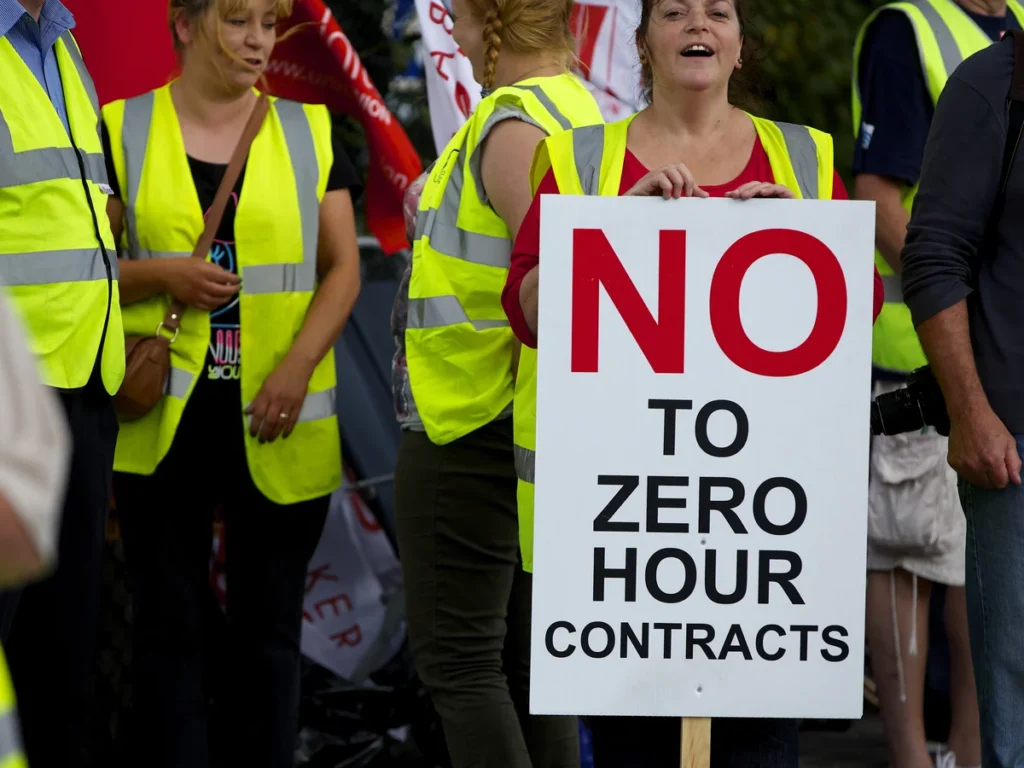
1.8 million people in the UK are stuck on zero-hours contracts (2025). That’s 1.8 million workers who don’t know how many hours — or how much pay — they’ll get from week to week. And while politicians continue to promise reform, little has changed on the ground.
No Guaranteed Hours, No Guaranteed Future
Zero-hours contracts are sold as “flexible,” but for too many workers, they mean insecurity and exploitation. You may be called in with little notice, sent home with no pay, or penalised for turning down shifts — even when you have a legitimate reason.
A 2023 report from the TUC revealed that 60% of zero-hours workers earn less than £15,000 a year, and nearly half struggle to plan childcare or pay bills due to unpredictable schedules.
“When you don’t know if you’ll be working next week, you can’t plan anything — rent, food, life,” said one UWA member working in hospitality.
Where’s the Action?
The Labour Party has previously pledged to end zero-hours contracts, but progress has stalled. In the meantime, employers continue to benefit from the imbalance of power — using flexible contracts to dodge their responsibilities, while workers shoulder all the risk.
Why This Matters to All of Us
Even if you’re not on a zero-hours contract yourself, their widespread use drags down pay and conditions across entire sectors. When insecure work becomes normal, it becomes harder for everyone to stand up for fair treatment.
What Can Be Done?
That’s where we come in.
At United Workers Alliance (UWA), we:
- Support workers on zero-hours contracts to understand their rights.
- Help negotiate better terms, including fixed hours where possible.
- Challenge bad employers through collective action and legal routes.
- Push for political change — but we don’t wait for politicians to act.
We believe every worker deserves security, predictability, and respect.
Sources:
- TUC Report on Insecure Work (2023)
- Office for National Statistics, Labour Market Overview
- Unite the Union statement, May 2025